The article examines variants of legends about lame demons that were preserved among Armenians until the 19th – 20th centuries in the vicinity of the Monastery of St. Karapet in Taron and the Monastery of Khogvots in Vaspurakan. In both cases, the legends were told at places believed to be the locations of gates leading to the underworld, or the “Gates of Death”. The imagery of these lame demons has been the subject of controversial interpretations in Armenian folkloric studies. Analysis of the symbolic system of the legends, including the tonir, ashes, river, and bridge, reveals remnants of a cult of the Mother Goddess who served as a guardian of the entrance to the underworld, who and carried ashes – the burnt remains of the dead – across a mythical river to the subterranean realm. Mythical traditions concerning the river and bridge Prebatman clearly trace their origins to the other world. It is evident that these lame demons, transferring ashes from the tonir at the gates of death, retain features of the pagan gods of the underworld. These demons are demonic incarnations of ancient pagan deities that were consigned to oblivion during the Christian era. However, memories of worshipping these deities were preserved among people. This article attempts to interpret the legends as remnants of worship of earth goddesses, fertility goddesses, and goddesses of the underworld? such as Anahit/Astghik and Demeter/Sandaramet, who survived in particular in demonized images of old women – guardians of entrance to the otherworld, which heroes often encounter by a tonir or well in fairy tales and Sasna Tsrer (Daredevils of Sasun) epic. Traces of Mother Goddess cult can be found in later epic stories about the brothers Demetr and Gisane that were related to St. Karapet and included the name of the goddess – Demeter – only.
Key words: lame demon, legend, Gates of Death, tonir, ashes, river, bridge, old women in tales, epic, Demeter, Sandaramet, underworld, Mother Goddess cult
DOI: 10.22250/2072-8662-2025-4-5-14
About the author
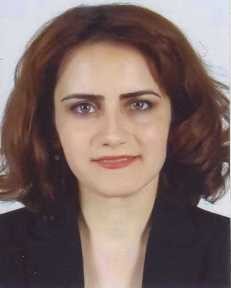 |
Nvard Kh. Vardanyan – Candidate of Philological Sciences, Yerevan State University; 1 Alek Manukyan, Yerevan, 0025, Armenia; Institute of Archaeology and Ethnography NAS RA; 15 Charentc Yerevan, 0025, Armenia; This email address is being protected from spambots. You need JavaScript enabled to view it. |